
Knee pain when walking down the stairs can feel alarming and downright scary, especially if it happens suddenly.
You may start to wonder: Is this just a minor strain or something more serious?
But the truth is, this kind of discomfort is very common, and in many cases, isn’t as severe as it feels.
In fact, because it’s often caused by issues like muscle imbalances, joint stress, or natural wear and tear, this injury can actually improve with the right approach.
So, in this post, we’re going to break it all down: what causes knee pain when walking downstairs, simple ways to fix it, and when it may be time to seek professional help.
This post contains affiliate links, meaning that if you choose to click through and make a purchase, I will receive a small commission at no additional cost to you.
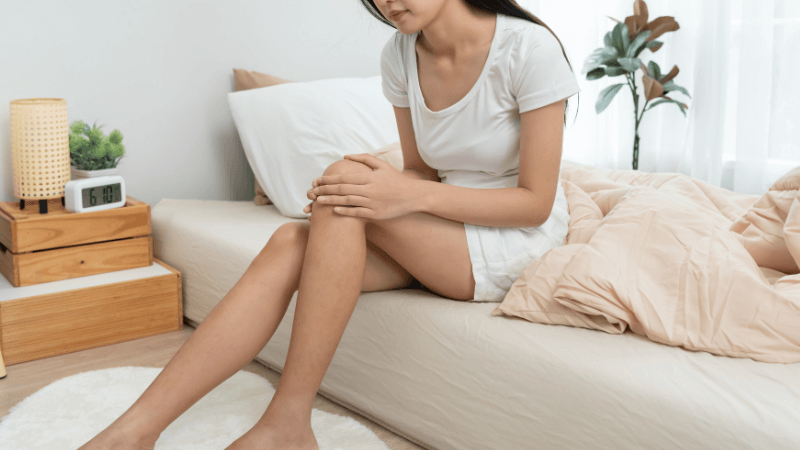
Why Your Knee Hurts When Going Downstairs
The knee is the largest joint in your body, connecting your thigh bone (femur) to your shin (tibia).
It’s involved in almost every movement your legs make, which means it carries a lot of weight just walking around.
This means with every step you take, your knees absorb roughly 1.5 to 3 times your body weight.
So, if someone weighs 120 pounds, their knees are taking on the force of about 180 to 240 pounds each step.
Now, imagine that same person going down the stairs.
Their legs take on even more stress, primarily in the patellofemoral area, where the kneecap meets the thigh bone.
When the knees bend deeply while supporting your full weight, they essentially act as shock absorbers.
That extra work can make discomfort worse, particularly if the knee is already inflamed or a little unstable.
What Causes Knee Pain When Going Downstairs
Knee discomfort usually points to an underlying issue, and going downstairs can make it more noticeable.
Here are some of the most common reasons your knees might hurt when descending the stairs:
Weak Muscles
Weak surrounding muscles, such as the thighs, hamstrings, and glutes, reduce support around the knee joint, increasing strain when traveling downstairs.
Patellofemoral Pain Syndrome (Runner’s Knee)
Misaligned, overused, or weak muscles may create friction in the kneecap (patella), leading to irritation behind the kneecap and added stress on the surrounding area. In other words, the kneecap may not glide smoothly within the groove of the femur, which can result in pain and discomfort.
Osteoarthritis
When the cartilage that cushions the bones breaks down over time, it can cause increased friction within the joint, leading to pain and stiffness. It is often made worse by weight-bearing activities like descending the stairs.
Meniscus Tears
A tear in the cartilage that cushions the knee and helps absorb shock can lead to inflammation, a feeling of instability, and uncomfortable movement between the femur and tibia.
How to Avoid Making Knee Pain When Going Downstairs Worse
There are several things you can do to avoid making the pain worse when going downstairs. Here are a few ideas to consider:
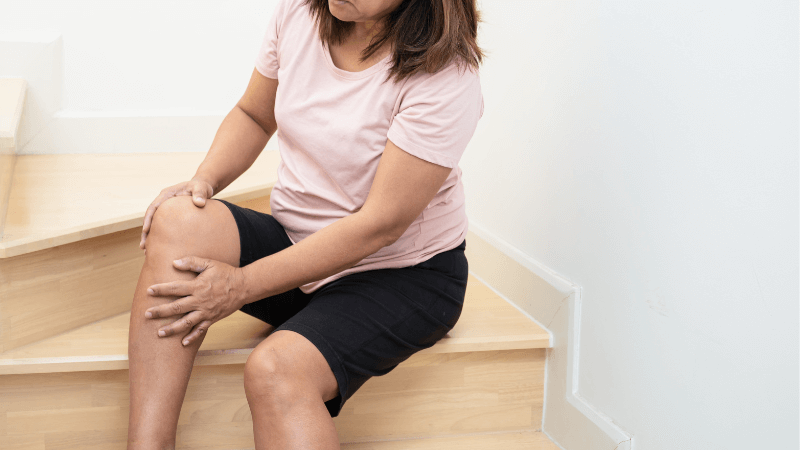
Slow Down
Descending too quickly places more force on the knee joint, resulting in less muscular control and greater strain. Try focusing on the lowering portion of the movement. Take slower, deliberate steps when stepping down to maintain better control and reduce excess stress on the joint.
Watch Your Knee Placement
Pay attention to how your knee tracks as you lower yourself down. Allowing the knee to lean inward can change how your weight and force are distributed through the joint, potentially increasing irritation. Instead, aim to keep the knee tracking forward over your second and third toes during movement.
Use Proper Support
Holding onto the railing provides added stability and balance. It can significantly reduce the amount of force placed on the knee joint and allow for better control while stepping down.
Wear Proper Support
If you’re experiencing discomfort, wearing a knee sleeve or brace may provide additional support and compression. This can help improve comfort and stability during movement. However, it’s best used as a temporary aid rather than a long-term solution. Consult a fitness or medical professional when deciding the best form of support to use.
Home Remedies for Knee Pain
There are a few things you can do if you believe you’re dealing with a minor or mild knee issue. One common approach is the RICE method, which stands for rest, ice, compression, and elevation.
Start by allowing your knee to rest, giving it a break from activities like excessive walking, deep bending, or intense exercise.
Then apply ice to the area for 10 to 20 minutes at a time to help reduce pain and swelling, especially during the first day or two after symptoms begin.
Next, apply light compression, such as an elastic wrap or knee sleeve, to help manage swelling and provide support. Finally, elevate the knee above heart level when possible to help reduce fluid buildup.
If you need to be on your feet for extended periods, such as when leaving the house, wearing a knee sleeve or brace may provide additional aid and comfort depending on your symptoms.
As discomfort begins to improve, incorporating gentle strengthening exercises such as leg raises or controlled leg extensions, and or activities like yoga can help support the muscles around the knee.
For a more detailed approach, you can explore these exercises for knee pain.
When to See A Doctor
If you hear a sudden popping noise accompanied by immediate pain when bending your knee, this may be a sign of a more serious injury and should be checked by a medical professional.
If you experience a locking sensation, significant swelling, or an inability to bear weight on your leg, it’s best to have your knee evaluated to rule out anything more serious.
Lastly, if your knee pain continues despite trying home remedies or begins to interfere with your daily activities, it’s worth getting it looked at.
Related Posts
Best Exercises to Reduce Knee Pain At Home
Best Joint-Friendly Exercises for Bad Knees
3 Low-Impact Knee-Strengthening Exercises
Knee Pain After Workouts? Expert Tips to Relieve It
Putting Your Best Knee Forward
Knee pain when going downstairs can be concerning, particularly if it’s something you’ve never experienced before or if it comes on suddenly.
Fortunately, in many cases, there is an underlying issue like weakened muscles or muscle imbalances, that can be improved over time.
By paying attention to your symptoms, you can make informed decisions about when to seek medical care and which recovery approach may be best for you.
If you have any questions or comments, feel free to leave them below or send me a message through the contact page.
Don’t forget to sign up for the email list to stay updated on the latest posts. You’ll even receive a free fitness guide when you join through the pop-up form.
Happy recovery!
The information shared in this post is for general educational and motivational purposes only. It is not medical advice and should not replace guidance from a licensed healthcare professional. Always listen to your body and consult with a qualified medical provider before beginning any new exercise, wellness, or nutrition routine. Especially if you have existing health conditions or concerns.



Leave a Reply